

Table of Contents
You may have heard of 3 phase solar inverters and wondered what they might be. How are they different from the regular solar inverter?
You may have heard of 3 phase solar inverters and wondered what they might be. How are they different from the regular solar inverter and how does it work? Three phase solar inverters are made for grid-connected properties with a 3 phase electrical supply. This leads to the next question – what exactly is a 3 phase supply?
In this article, we’ll explore 3-phase solar inverters, which efficiently convert DC electricity from solar panels into AC power. We’ll also explain the importance of three-phase electricity in commercial and industrial settings.
 |
|---|
What is a 3 phase solar inverter?
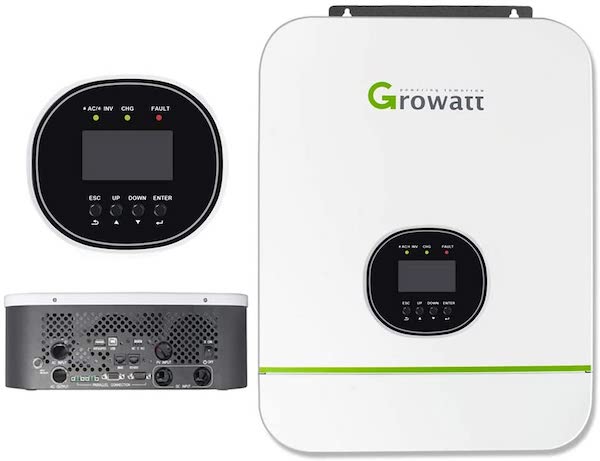
A 3-phase solar inverter converts DC power generated by solar panels into AC electricity just like any inverter. However, a three phase solar inverter does something extra, which is, it splits the AC into 3 chunks for a three phase supply.
3 phase solar inverters are reliable, efficient, and affordable. It converts DC power generated by solar panels into AC electricity just like any inverter. However, a three phase solar inverter does something extra, which is, it splits the AC into 3 chunks for a three phase supply. These inverters outperform single-phase models and are suitable for homes and businesses.
What is a 3 phase supply?
The electricity supply of homes in some countries have only 1 phase while others have 2 or 3 phases, or a mix of either. In Australia, most homes have a single phase.
This means that they have one live wire coming in from the grid. In other words, a 1 phase electricity supply constitutes a home connected to a power grid by one main cable running through the electric meter.
A home with three phase supply has 3 live wires coming in from the grid. The live wires are connected to the home through a 3 phase meter. This means that there can be 3 sets of electric circuitry in the building. Think of the phases as webs.
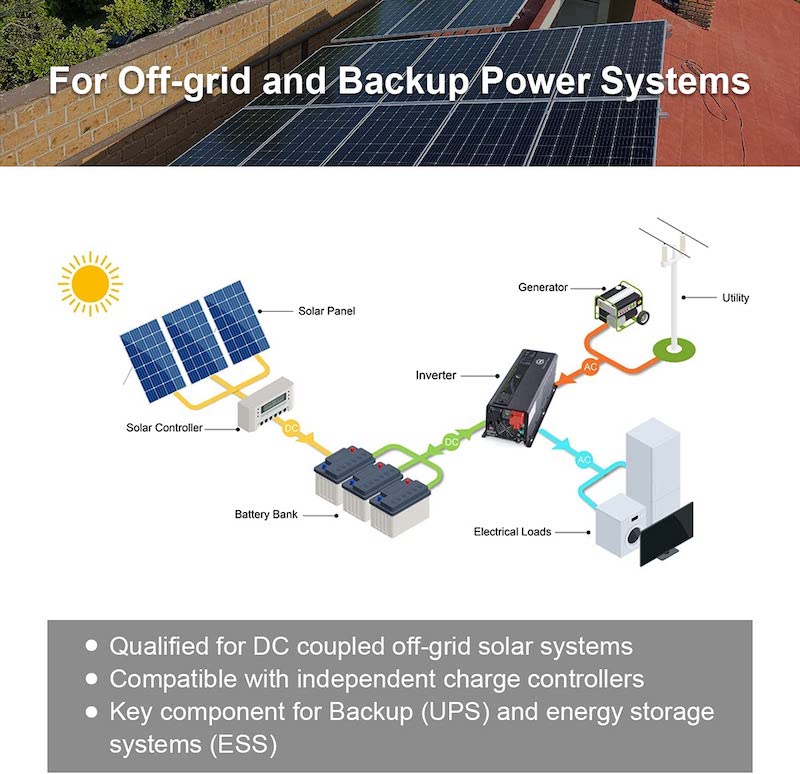
A 3 phase solar inverter wiring diagram shows how to connect the inverter to your solar panels and battery bank. It is important to follow the wiring diagram carefully to avoid any problems.
 |
|---|
How to connect a 3 phase solar inverter?
It is important to follow the wiring diagram carefully when connecting a 3 phase solar inverter. Any mistakes can damage the inverter or void the warranty.
For example, in a large house, one web of electric circuits may supply power to only a specific part of the house, such as the lights and fixtures. Another web supplies power to all the outdoor appliances and fixtures such as the swimming pool pump and outdoor lighting. Another web supplies all the ad-hoc and large appliances such as air-conditioners, electric car charger, spa, sauna and so on.
To illustrate further, a multi floor building with a 3 phase supply can have phases designated for different uses. It can have one phase to power all the needs of one floor, but use all 3 phases to power the lifts.
Homes with a 3 phase supply can extract more power from the grid. They are also less likely to be affected by a grid power outage since it has 3 live wires from the grid as opposed to only one in a 1 phase supply.
An off grid 3 phase solar inverter can be valuable for powering a home or business that is not connected to the grid. Off grid solar inverters are designed to work with batteries to provide power 24/7.
A 3 phase solar inverter off grid system can provide you with all of your electricity needs, even when the grid is down. It is a good option for people who live in rural areas or who want to be self-sufficient.
With regards to solar energy, having a 3 phase supply means you can send much more solar power back into the grid compared to a single phase supply. The potential can be three to six times as much, depending on local Distribution Network Service Provider (DNSP) rules.
How do you know if you have 3 phase power?
You can tell if you have 3-phase power by looking at your electrical meter. If your meter has four wires, then you have 3-phase power.
There are a few ways to know this, by looking at your:
- Main switchboard
- Overhead main
- Meter
- Isolation link
Main switchboard
In some countries, a switchboard is referred to as the main electrical fuse, as the fuses are organised together with the main power lines.
Electrical fuses help to prevent major damage to your home when there is a huge surge of electricity as well as separate incoming electricity into different circuits in the house.
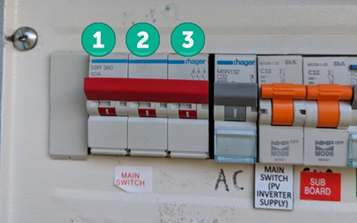
When you look at your switchboard, you will see a row of panels or switches, sometimes referred to as ‘poles’. The supply lines in newer switchboards are sometimes red in colour.
Count the ‘poles’. If you see three poles joined by a single bar, you have a 3 phase. In a switchboard of a 3-phase supply, you are forced to switch all the live wires off or on simultaneously by pushing the bar that joins the switches.
If you see only one ‘pole’, then you have a single phase. Homes with 2 phase supply have 2 poles linked by a single bar.
It is also possible to have 3 switches but only a 2 phase supply. In this instance, you may need to check the meter or iso-link.
Overhead mains
A 3 phase supply can also be indicated in the number of cables connected to the house. They can be seen hooked up near the roof of the building. The ‘point of attachment’ will show a bundle of 4 cables – 3 cables for 3 phases of live wires and 1 neutral cable.

If you see only 2 cables, it means there is only a 1 phase supply because one cable is always allocated for the neutral cable.
Meter
There are many types of three phase meters. Some are digital, and some are not. For the non-digital ones, count the ‘poles’ on the meter isolator. If you see only one pole, it is a single phase meter. The sample image below is for a 3 phase supply.
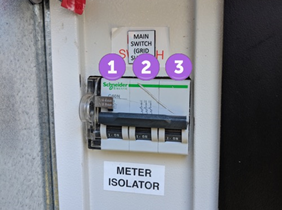
If it is a digital meter, you’ll need to look at the display. A 3 phase meter will show L1, L2 and L3.
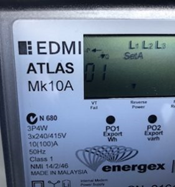
In some countries, the phases are not so easily identified through the meters.

Isolation links
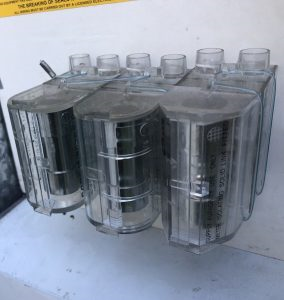
Often referred to as ‘iso-links’, they are a relatively new electrical technology having only been around from 2011. This component is meant to disconnect power from the electric meter in case the meter itself needs to be replaced.
Not every house may have an iso-link. If it does, the number of iso-links will indicate the number of phases.
What are your solar options if you have a three-phase supply?
You options are:
- a single phase solar inverter
- microinverters
- a three phase solar inverter
All of them are valid options but there are additional benefits for the last one, which will be explained in the next section.
When deciding whether to opt for a single phase solar inverter or a 3 phase, you’ll need to understand these two things first: three phase billing and three phase loading.
Three phase billing
The reason most people have solar installations for their grid-connected home is to reduce the cost of their electricity bill by harvesting free solar energy. The incentive for doing so is even greater in countries which have Feed in Tariffs (FIT).
Naturally, people would want to use as much solar-generated electricity as they can and reduce paying the higher rates of grid-powered electricity. However, there are some concerns that a 3 phase solar inverter will affect billing.
What really counts when it comes to billing is the meter. A house with a 3 phase supply will have a 3 phase meter. The meter will take into account the sum of all the electricity being used on all the phases. Then, subtract the amount of solar-generated electricity for export.
Three phase load balancing
The issue of load balancing is a real one. Meaning, one phase has a bigger voltage load than the other two phases.
Having a balanced load across 3 phases of supply is good for power quality. There must be a balance between power generation and consumption. An imbalanced load on one phase can cause the inverter to trip.
Say you have a phase that supports a large swimming pool pump which has a high start-up demand. If the demand for electricity is higher than the supply, it creates an imbalance in the phase and could force the inverter to trip. Inverters generally don’t function well when there is unstable voltage.
Since analysing the energy consumption demand of your household for a 3 phase system can get quite complicated, it is best to engage a trustworthy and qualified solar installer who is familiar with the nuances of multi-phase electricity supply.
Benefits of a 3 phase solar inverter
The main benefit is that a 3 phase solar inverter can feed electricity evenly into all 3 phases of a property. To better explain this point, let us compare it with the workings of a single phase solar inverter for a 3 phase supply.
A 5 kW single phase solar inverter working at maximum capacity would feed 5kW of solar power into one of the three phases in a property. However, a three phase 5kW solar inverter would divide the 5kW equally into 3 phases. Each phase of the property will receive 1.7 kW each.
 |
|---|
The difference matters when the solar power system can generate more electricity than can be handled by a single phase. For instance, if a system produces over 6kW and feeds all of that into one phase, this may cause an overload of that phase.
When an overload occurs, it could trip the circuit of that phase, and you will experience an interruption in electrical supply instead.
Depending on the country or source which you buy a 3 phase solar inverter from and the brand, it can cost you $300 more than an equivalent single phase solar inverter.
A 3 phase solar inverter needs to run with a compatible solar battery, which may be an additional cost if you don’t already have one.
3-phase solar inverters are generally more efficient than single-phase solar inverters. This means that they can generate more electricity from the same amount of solar panels.
There are a few reasons for this:
- It can use a more efficient topology than single-phase inverters.
- It can spread the load across three phases, which reduces losses.
- It can operate at higher voltages, which also reduces losses.
As a result, 3-phase inverters can typically achieve efficiency ratings of 95% or higher, while single-phase inverters typically have efficiency ratings of 90-93%.
Is it cheaper to run on 3 phase solar inverters?
It depends on a number of factors, including the size of your solar panel system, the cost of electricity in your area, and the amount of electricity you use. They can be used with or without batteries, making them a good option for both off-grid and on-grid solar systems.
How to connect 3 phase solar inverter in your home?
Whether or not you can get 3-phase power in your home depends on your utility company. Some utility companies offer 3-phase power to residential customers, while others do not.
Yes, but if your home does not already have 3 phase supply, it can get extremely costly. If you are building a new home, installing a 3 phase inverter won’t cost you much more.
The electrician only needs to pull a couple of extra cables to your switchboard while he is doing the wiring. If done correctly, it will minimise the impact of voltage rise, and it will also allow you to install a much bigger solar electrical system.
Conclusion
Three phase solar inverters have the one up over single phase inverters when it is installed in a solar system on a property with 3 phase supply. Its advantage is that it splits the AC converted electricity from the solar panels into three batches each time.
They are more efficient and can handle more power than single-phase solar inverters. This can help you to save money on your electricity bill.
When the divided load is fed into the property, which is connected to the power grid, there is little to no likelihood of a voltage rise occurring.
This is because the split AC amount is minimal compared to the total AC flowing in from a single phase solar inverter. A 3 phase solar inverter, thus, guarantees a smoother and uninterrupted power supply since it does not trip the grid with voltage overload.
In general, the best 3 phase solar inverters can help you save money on your electricity bill. This is because they are more efficient and can handle more power than single-phase solar inverters.


